
The Sedona Flight Log 7: Sedona’s Most Epic Views: A Photographer’s Guide from the Sky
But some of the best Sedona photography spots are not traditional overlooks at all.
They are hundreds of feet above them.
From the sky, familiar formations become part of a much larger landscape. Cathedral Rock rises out of an intricate network of ridges and valleys. Bell Rock connects visually with neighboring formations. Canyon walls reveal layers, textures, and shadows that cannot be fully appreciated from the ground.
As a team that spends its days showing guests Northern Arizona from above, we know how quickly the view can transform once the wheels leave the runway. For photographers, that change in perspective creates possibilities that no roadside pullout or hiking trail can duplicate.
And fall is one of the most beautiful times to experience it.
Why Fall Is an Epic Season for Sedona Photography
October brings some of Northern Arizona’s most interesting combinations of color, texture, and light.
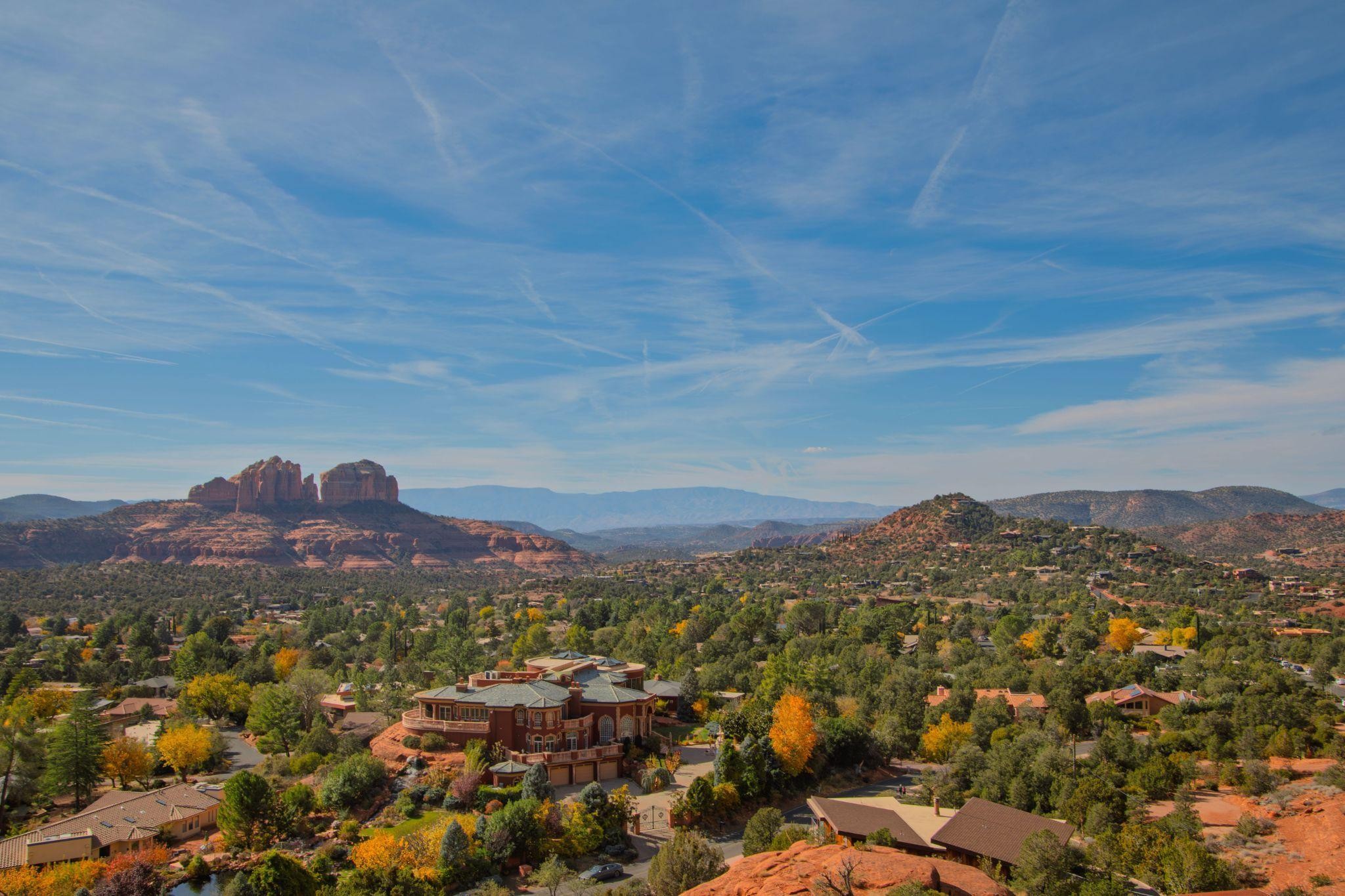
According to Visit Arizona’s fall color guide, fall color typically reaches the high-desert creeks around Sedona, Cottonwood, and Camp Verde from late September through late October. Yellow foliage along waterways creates a striking contrast against Sedona’s red sandstone.
From above, that contrast becomes even more dramatic.
Rather than seeing a small stand of colorful trees from ground level, aerial photography can reveal ribbons of fall color winding through canyons and valleys. Add Sedona’s red rock formations and the deep greens of Northern Arizona vegetation, and photographers can capture several distinct colors and textures in a single frame.
Then there is the light.
Golden hour produces softer, warmer, more directional light because the sun sits lower on the horizon. It also creates longer shadows, which can dramatically emphasize the shape and texture of a landscape.
For Sedona, those shadows are part of the show.
Cathedral Rock: Capture the Scale From Above
Cathedral Rock is one of Sedona’s defining landmarks and one of its most photographed.
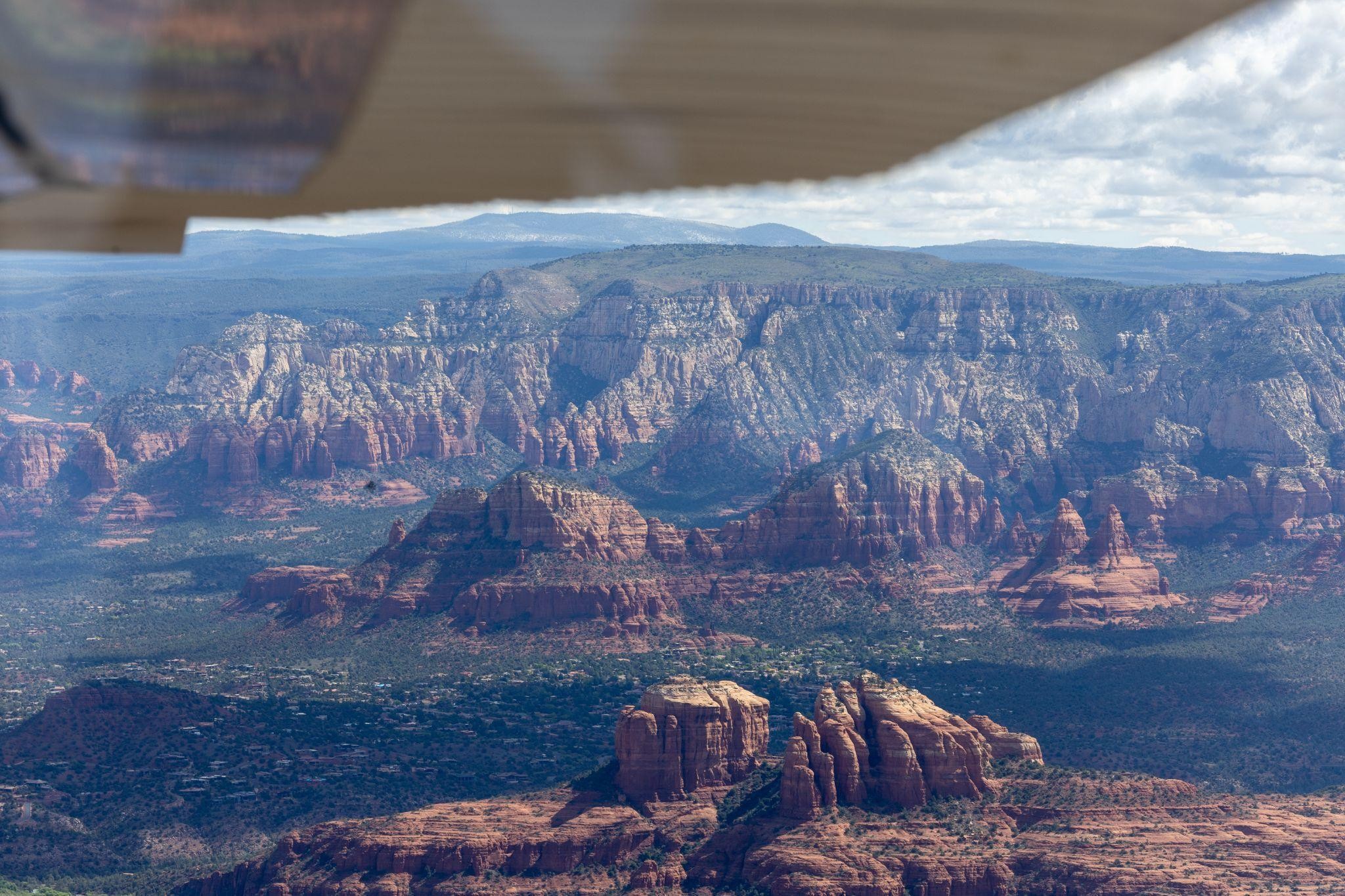
From the ground, photographers often focus on its towering sandstone spires. From the air, an entirely different composition appears.
Instead of filling the frame immediately, try showing Cathedral Rock within the larger landscape. Include the valleys, ridgelines, and surrounding formations to communicate just how dramatically it rises from Red Rock Country.
Directional morning or afternoon light can also reveal subtle textures across the rock face while creating deep shadows between the formation’s towers.
Our Canyons & Cliffs Airplane Tour provides aerial views of Cathedral Rock along with Bell Rock, Courthouse Butte, Boynton Canyon, Long Canyon, Sycamore Canyon, and other Northern Arizona landmarks.
For a photographer, that means the subject is constantly changing.
Bell Rock: Think Beyond the Landmark
From above, Bell Rock is no longer isolated from its surroundings. Roads, washes, ridges, vegetation, and nearby formations become natural elements within the frame.
Look for lines in the landscape that guide the eye toward the formation. A road curving through the desert, the edge of a ridge, or a transition between vegetation and sandstone can become a powerful compositional tool.
This is one of our favorite things about aerial photography in Sedona. The landscape begins to reveal patterns that are difficult to recognize when you are standing inside it.
Let Canyon Shadows Become Part of the Photograph
Not every memorable Sedona image needs a famous formation in the center.
Some of the most dramatic views from our flights come from the canyons themselves.
Sycamore Canyon, Boynton Canyon, Long Canyon, Secret Canyon, and the surrounding wilderness offer layers of cliffs and ridges that change continuously with the position of the sun.
Our Canyons & Cliffs Airplane Tour, for example, moves through Sycamore Canyon before continuing past Loy Butte, Red Canyon, Bear Mountain, Boynton Canyon, Long Canyon, and Sedona’s major formations.
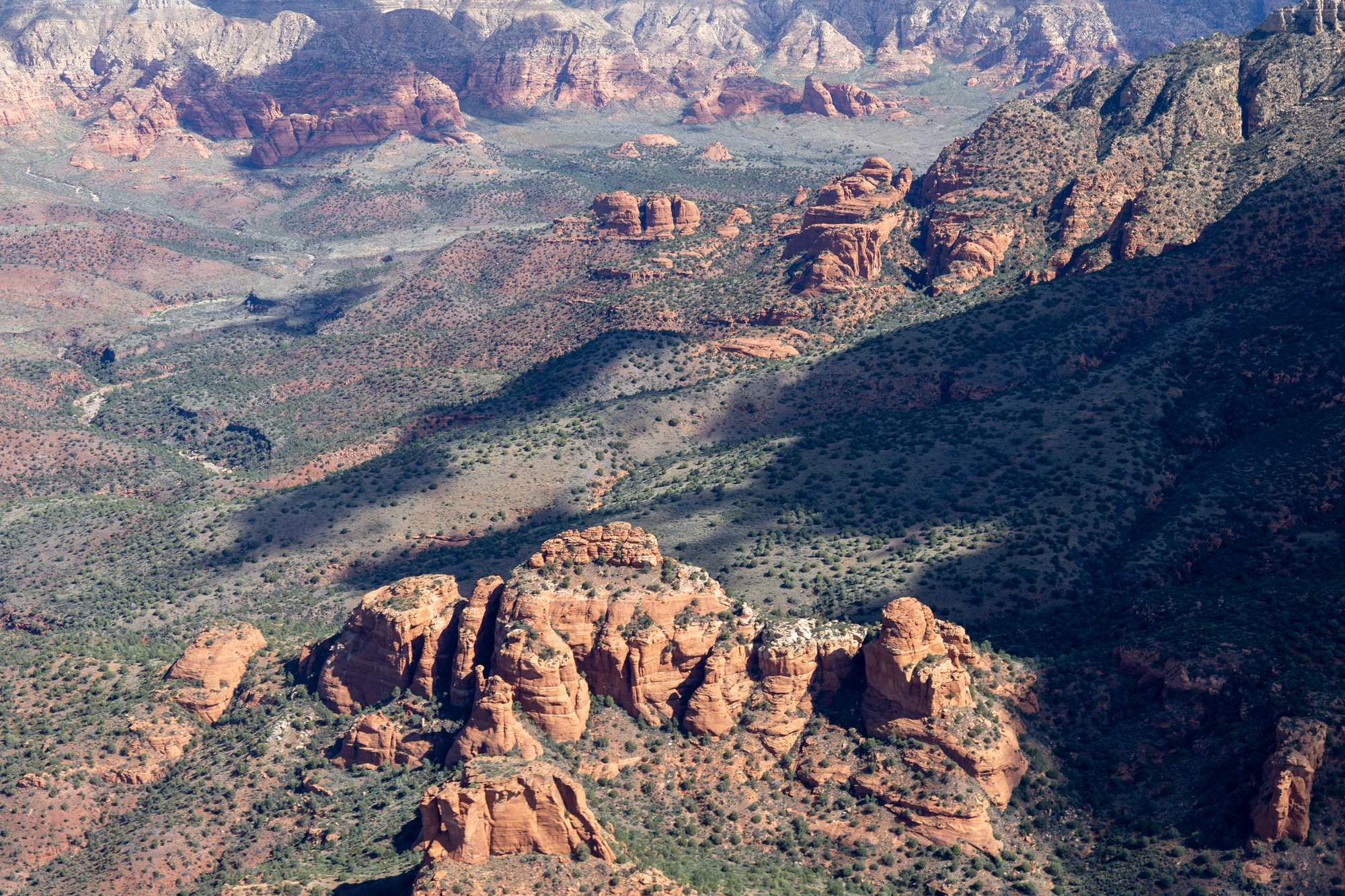
As the sun gets lower, the shadows inside these landscapes become longer and deeper.
Do not automatically avoid those darker areas. Use them.
A brightly illuminated ridge next to a canyon in shadow creates depth. Alternating bands of sunlight and shade can give an image rhythm. In autumn, pockets of yellow foliage can become small bursts of color against red sandstone and dark canyon walls.
The light can change quickly, so stay ready.
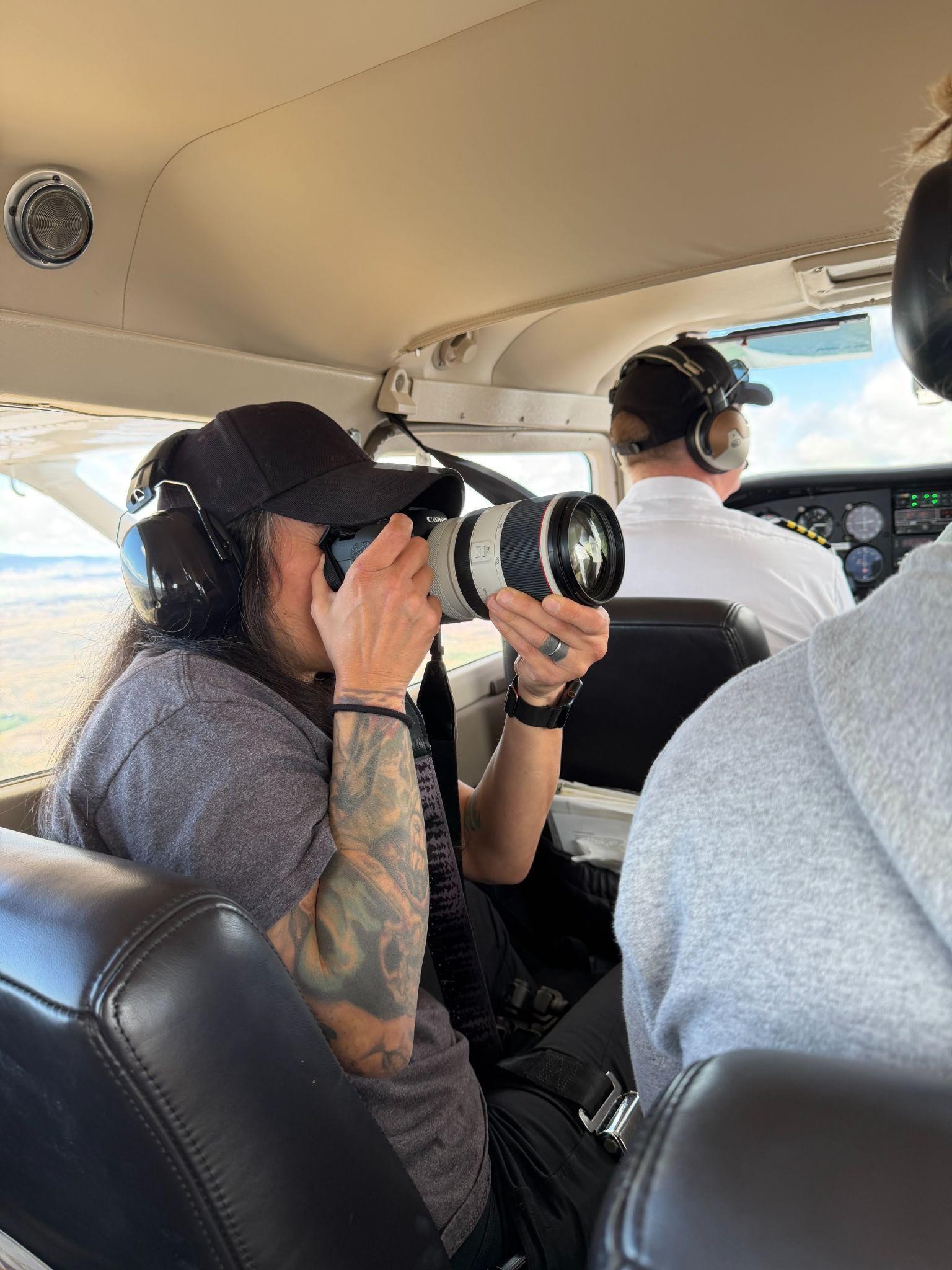
Aerial Photography Tips Before You Fly
Photographing from an aircraft requires a slightly different approach than shooting from an overlook.
Nikon’s aerial photography guidance recommends shutter speeds above 1/500 second for aerial photography, increasing ISO when needed to maintain a fast enough shutter. When photographing through an aircraft window, Nikon also recommends bringing the lens close to the glass without touching it, since contact with the window can transfer aircraft vibration into the camera. Dark clothing can also help reduce reflections.
A few tips can make your Sedona aerial photography experience even better:
Use a fast shutter speed. Start around 1/500 second or faster. The landscape may appear still, but you are photographing it from a moving aircraft.
Use continuous shooting. Perspective changes every second in the air. Taking a short burst of images can help capture the strongest composition during a turn or pass.
Bring a versatile lens. A standard zoom gives you flexibility to photograph sweeping landscapes and tighter formations without changing lenses during the flight.
Watch reflections. If you are photographing through a window, wear darker clothing and position the camera close to the glass without resting against it.
Check your settings early. Confirm exposure and focus shortly after you begin shooting, then keep your attention outside. Aerial opportunities can disappear in seconds.
Most importantly, follow all instructions from your pilot and crew. Safety always comes before the shot.
Golden Hour Changes Everything
Sedona looks incredible throughout the day, but photographers understand what lower-angle light can do.
Adobe’s guide to golden hour photography describes golden hour as the period shortly after sunrise and before sunset when light becomes warmer, softer, and more directional. The lower sun angle also produces longer shadows.
Those characteristics pair exceptionally well with Sedona’s geology.
Long shadows can define canyon walls. Warm light intensifies the oranges and reds of sandstone. Ridges that appear flatter under midday light suddenly show their texture.
When booking primarily for photography, ask our team about available flight times and what conditions may work best for the experience you want to capture. Weather, season, aircraft scheduling, and tour routing can all affect availability.
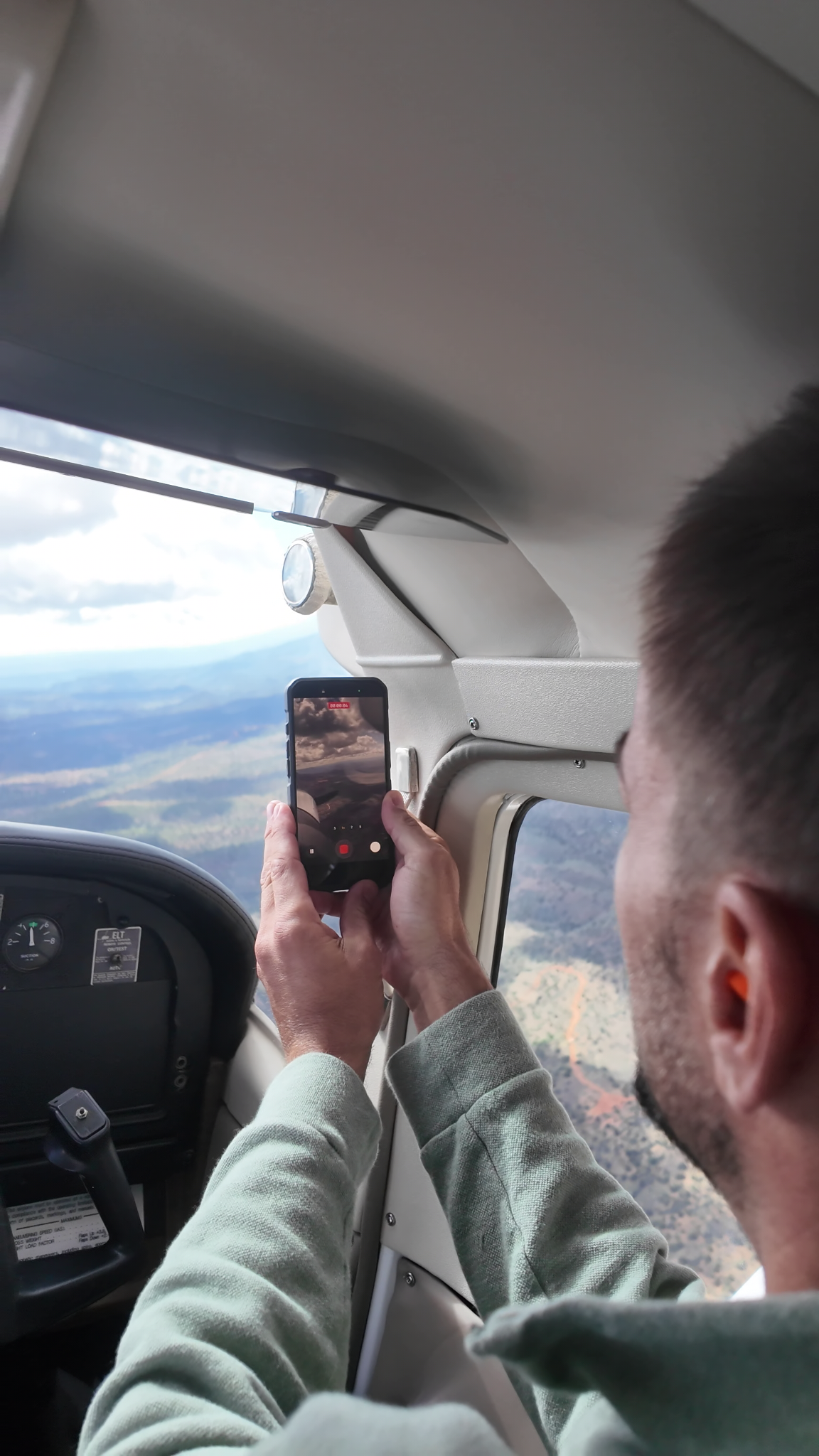
You Do Not Need a Professional Camera
Phones can capture remarkable aerial images, especially when the photographer concentrates on composition instead of digital zoom.
Turn on your camera grid and experiment with the rule of thirds. Keep the horizon straight. Use prominent formations to anchor the image. Take both horizontal and vertical versions while the opportunity is there.
The most important thing is being ready when the landscape reveals itself.
Which Sedona Air Tour Is Best for Photographers?
Different photographers want different experiences, and our flight options make it possible to choose how much of Northern Arizona you want in your frame.
For an accessible introduction to scenic flight, the Spirit of Sedona Airplane Tour starts at $99 per person for groups of two or more and lasts approximately 15 to 20 minutes. The route includes the Verde Valley, Sycamore Canyon, Loy Butte, Red Canyon, Bear Mountain, and more.
For photographers wanting greater variety and more time in the sky, the Canyons & Cliffs Airplane Tour expands the journey to approximately 35 minutes and includes Cathedral Rock, Bell Rock, Courthouse Butte, Sycamore Canyon, Boynton Canyon, Long Canyon, and additional formations.
Find Your Next Sedona Photography Spot in the Sky
There are countless Sedona photography spots worth exploring on the ground.
From the air, they become one connected masterpiece.
Cathedral Rock takes on new scale. Bell Rock becomes part of a much larger composition. Canyon shadows create patterns across the desert. Autumn foliage winds through the Verde Valley below. Every turn offers a perspective that may exist for only a few seconds.
That is what makes aerial photography in Sedona so exciting.
At Sedona Air Tours, our goal is not simply to fly over this remarkable landscape. As a 100% Native American-owned company, we approach every journey with respect for the land, professionalism in the air, and a commitment to giving our guests an experience worth remembering.
Whether you carry a professional camera or the phone in your pocket, fall is an incredible time to see Red Rock Country differently.
Ready to elevate your next photography adventure? Book your Sedona Air Tours flight and capture Northern Arizona from a perspective few visitors ever experience.